War or Economic Collapse: Can Iran Withstand the Pressure?
AAM has launched a town hall series with Iran International called Iran International Insight bringing together geopolitical analysts, economists, and security experts to evaluate the ongoing confrontation between Iran and the United States, regional ceasefires, and internal economic pressures.
Speaking on April 21, 2026 as part of the Iran International Insight Town Hall series in Washington, D.C. — presented by Iran International in partnership with America Abroad Media — a panel of economic and policy experts examined whether Iran's economy can survive the combined weight of war, sanctions, and a US blockade of the Strait of Hormuz. Moderated by Bozorgmehr Sharafedin, head of digital at Iran International, the discussion featured Miad Maleki, Jason Brodsky of United Against Nuclear Iran, and economic analyst Mohammad Machine-Chian.
"The clock is much faster on Iran's economy side than it is on our own side," Maleki said, arguing that despite Asia bearing the brunt of Hormuz-related energy disruptions, Tehran's own exposure to the waterway leaves it more vulnerable than the powers it is trying to pressure. Panelists warned that even a diplomatic breakthrough would offer little immediate relief: Machine-Chian projected inflation could climb toward 500% annually in a renewed conflict scenario, while Brodsky cautioned that flooding the regime with cash "would be the worst possible move," allowing it to rebuild the very military and repression programs the war had degraded.
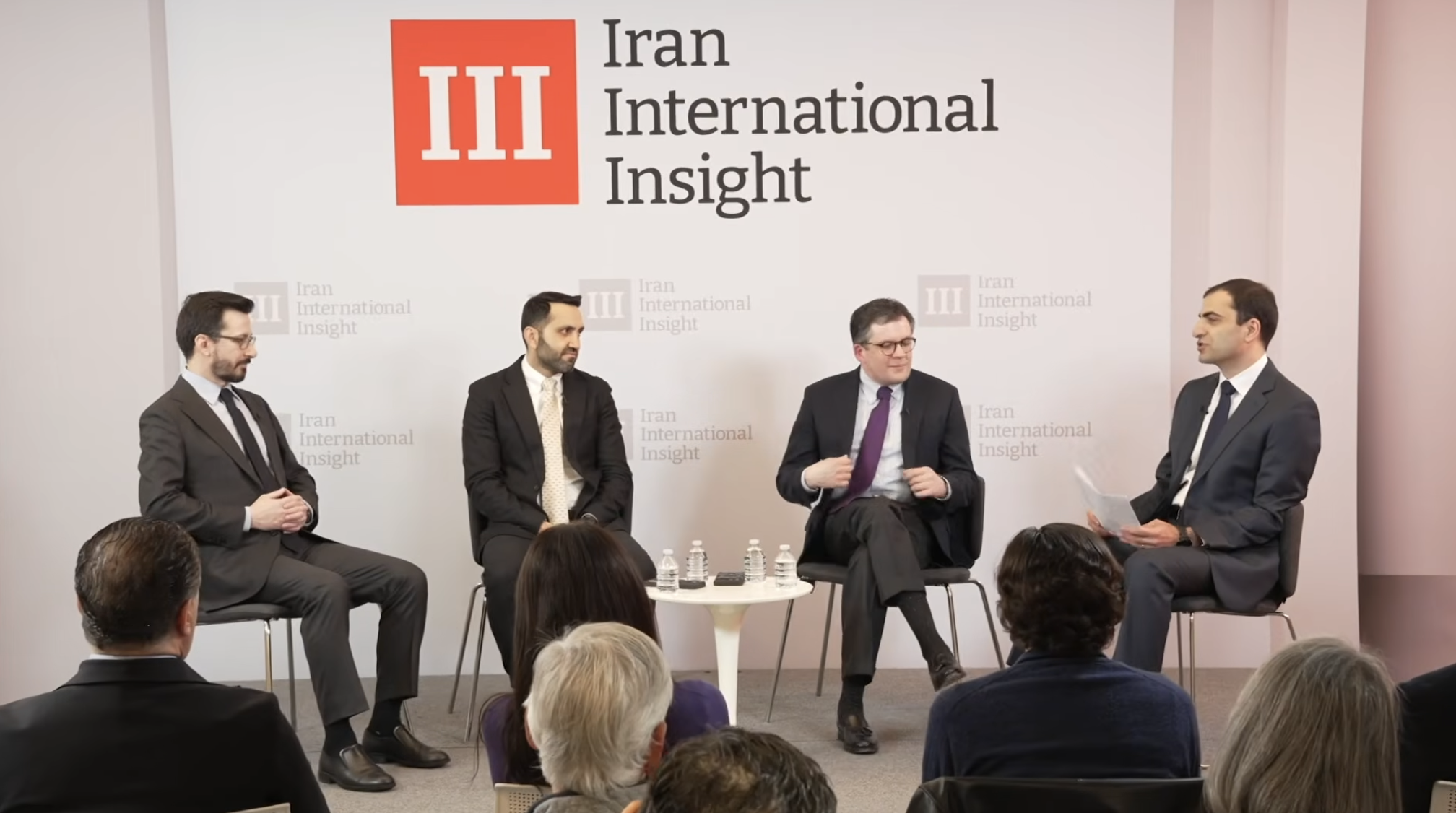
The Iran International Insight town hall, held on April 21, 2026, in Washington, DC, featured panelists (from left to right): Mohammad Machine-Chian, Miad Maleki, Jason Brodsky and Bozorgmehr Sharafedin.